
The pilot, which officially kicked off this fall, brings together the state’s Department of Agriculture, Department of Education, Department of Corrections and Governor Sarah Huckabee Sanders’ Faith-Based Initiatives Office to address food insecurity and increase students’ access to local food.
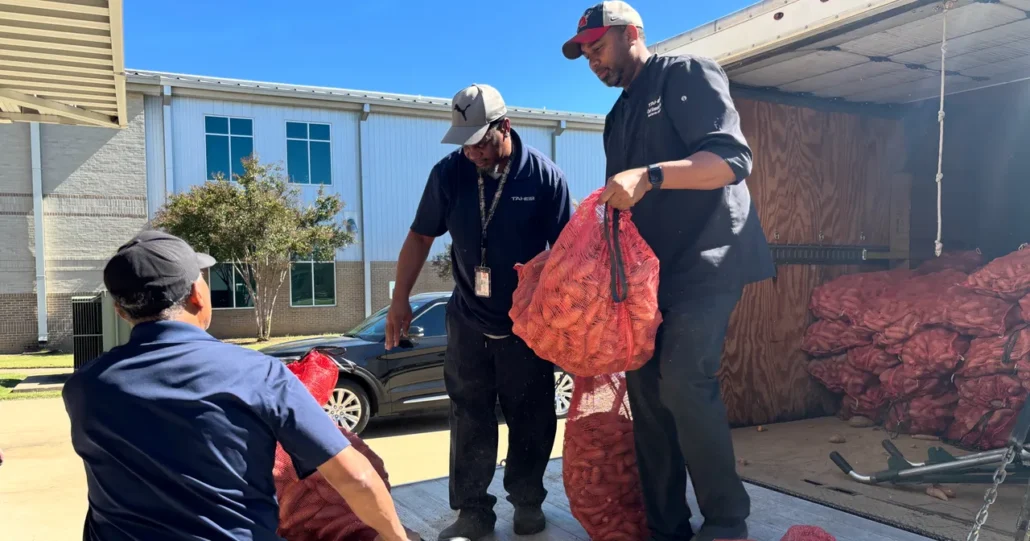
This fall, over 3,000 pounds of Arkansas-grown sweet potatoes arrived on the doorsteps of Marion School District in Marion, Arkansas. The produce was harvested by approximately 30 inmates from the state’s Department of Corrections as part of a new farm-to-school pilot program announced by Arkansas Governor Sarah Huckabee Sanders earlier this year.
The pilot was created in part due to “[Governor Sanders’] desire for all of state government to work together,” says Arkansas Secretary of Agriculture Wes Ward, and brings together the state’s Department of Agriculture, Department of Education, Department of Corrections and Sanders’ Faith-Based Initiatives Office to address food insecurity and increase students’ access to local food.
The delivery of sweet potatoes to Marion School District marks what the state hopes will be the first of many local ingredients delivered to the district for use in students’ meals.
From farm to cafeteria
Marion School District was chosen for the pilot due to their close proximity to the Arkansas Department of Corrections locations in Newport, Arkansas which is where a lot of the produce will be coming from says Child Nutrition Director Melissa Lace.
“As they harvest at the Department of Corrections, they have a community garden and also a stand where they sell their product,” she says. “We’re going to get what is left over of their surplus that they don’t sell, or they don’t feed to the inmates.”
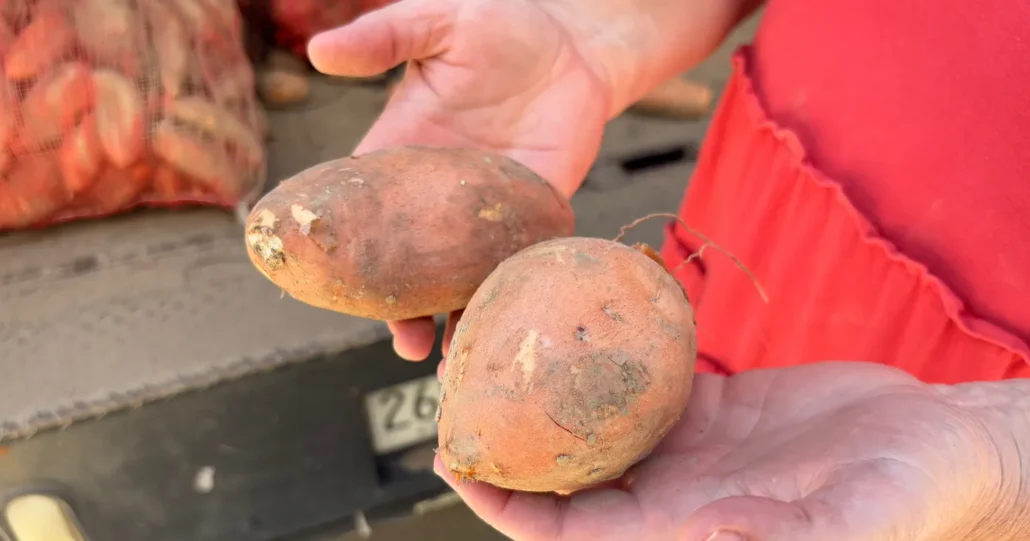
In addition, some of the produce will also be gleaned from farms in the state that have excess produce. The sweet potatoes, for example, came from Matthews Sweet Potato Farm in Wynne, Arkansas.
Along with sweet potatoes, the nutrition team can also expect other produce delivered through the pilot as the school year roles on like peas, corn, watermelon, strawberries, kale, potatoes, onions, squash, zucchini, okra, cucumbers and blueberries. It all comes at no cost to the district.
“It will just depend on what they’re harvesting and what’s in season,” says Lace. Any excess produce not needed by the nutrition program will be donated to the community or sent home with students. “It’s benefiting us, but it’s benefiting our community also,” she adds.
Exposing students to something new
The nutrition team at Marion prides itself on being a scratch-cook kitchen and “tries to get away from processed foods,” says Lace, so they’re excited about being able to incorporate more fresh produce into the menu.
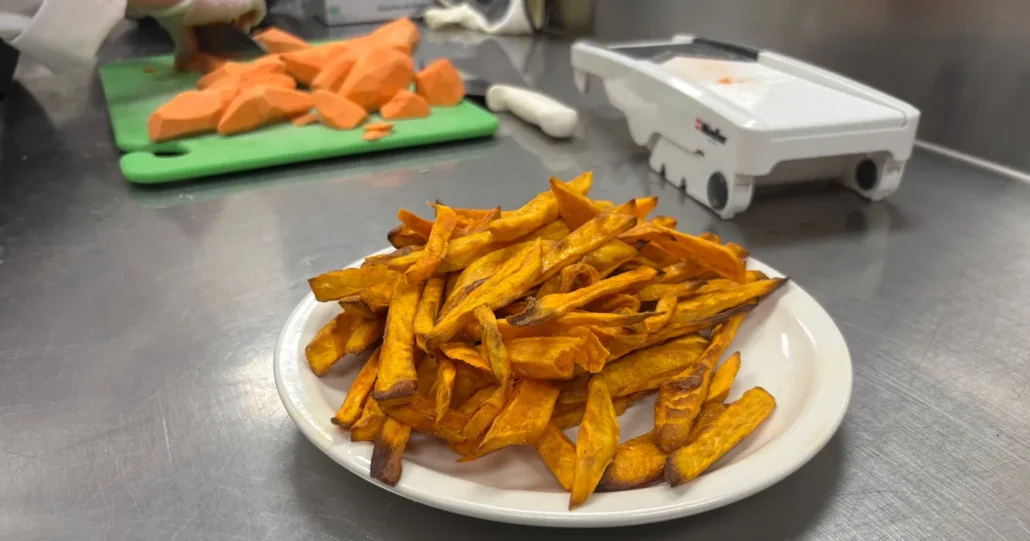
Marion’s chef Kenneth Lamb says a lot of the produce will most likely end up incorporated into a chefs special of the day. The sweet potatoes, for example, have been used to make sweet potato fries, chips, pies, casseroles and other menu items.
As more deliveries are made, Lamb also hopes to visit classrooms and give students a first-hand look at the fresh ingredients.
“I’ll be able to teach the students, have them touch it, feel it, see exactly what it is,” he says. “Teach them how to sauté and different variations of cooking methods with those ingredients.”
There will also likely be opportunities for students to meet farmers and learn more about how different ingredients are grown.
“We’ll be able to bring in farmers to talk to them about the crops and things,” says Lace.
At the end of the day, the goal is to expose students to foods that they may have never seen or tried before, says Lace, in the hope that it will encourage students to eat more fresh ingredients when the dine away from school.
“Our goal is to introduce the kids to food that they might not get at home,” she says. “If we can get the students to eat like this at school, then they’re most likely to go home to their parents and tell their parents, ‘Hey, I had fresh squash today. Can you make me fresh squash? Can you make me this?’ And so, that’s really our goal.”
Plans for future growth
Response to the program has been positive so far says Lace,
“It’s been great,” she says. “We featured it on our website, on Facebook, and the parents have all commented very positive about it.”
The produce offered through the pilot is currently being served at the junior high level and Marion hopes to expand the pilot to other schools in the district in the future.
There are also plans to add to the program at the state level, Secretary Ward says. The Department of Agriculture is currently looking into providing more resources to help schools turn the fresh ingredients into meals since the produce delivered to schools through the program is completely unprocessed.
One of their ideas, he says, is developing a series of recipes using the produce delivered through the program to teach school nutrition teams how to turn the ingredients into meals that students will enjoy.
“We would have recipes that would show what you can do with sweet potatoes,” he says.
The team at Marion School District is looking forward to seeing what produce they receive in the spring and hopes to provide guidance to other schools who may want to get involved with the program in the future.
“If this program is success, next year, we hope to help other schools partner with other prisons and other gardens and continue in other schools in Arkansas,” says Lace.
Secretary Ward agrees that the program has garnered a positive response so far and that he hopes that it will be able to grow in the years to come.
“The hope is that we can expand in the future,” he says.